Guides
How Local Delivery Operations Work
Follow local delivery operations from order intake and depot sorting through dispatch, pickup, delivery proof, exceptions, returns, and invoicing.
What to take away
- In local delivery operations, route density decides your cost per stop. Twenty drops inside four square miles beats eight drops across a whole city, even when the eight pay more per drop.
- Time the whole stop, not the drive. Parking, walking, signature and photo usually eat more of the clock than the miles do.
- Every stop needs a timestamp, a photo or a signature, and a name. Claims get settled by that record, not by the driver's memory.
- Know which authority governs what you carryFMCSA for interstate cargo securement, your state DOT for intrastate authority, CBP for parcels crossing into Canada.
- Price the contract against the stops it actually creates, not the stops the customer describes.
A local courier route is a sequence of small, repeated decisions: which stop next, where to park, who signs, what happens when nobody answers. Get the sequence right and the day runs itself. Get it wrong and the same twelve stops take eleven hours.
From order intake to invoice
Order intake. The customer submits shipment details and service requirements. Staff check that the address, delivery window, handling instructions, and billing account are usable before accepting the job; incomplete or unclear orders go back for correction.
Dispatch assignment. The dispatcher assigns a driver and vehicle to the pickup or delivery run based on capacity and service requirements. Stops are sequenced around time windows and geography, and the driver receives the stop list, contact details, access notes, and handling instructions.
Pickup and induction. For a customer pickup, the driver checks the package count and labels against the request and records collection. Parcels already tendered by a customer or upstream carrier are checked in at the depot so their receipt and custody are recorded.
Depot sort and handoff. Depot staff sort inducted parcels by route and time window, then stage them for the assigned driver. The driver and dispatcher reconcile the load against the route manifest before departure so missing or mismatched items can be addressed.
Load-out. The driver checks the manifest and secures the parcels, arranging them in delivery order where practical. Fragile or temperature-sensitive items are handled according to the job instructions and the vehicle or equipment available.
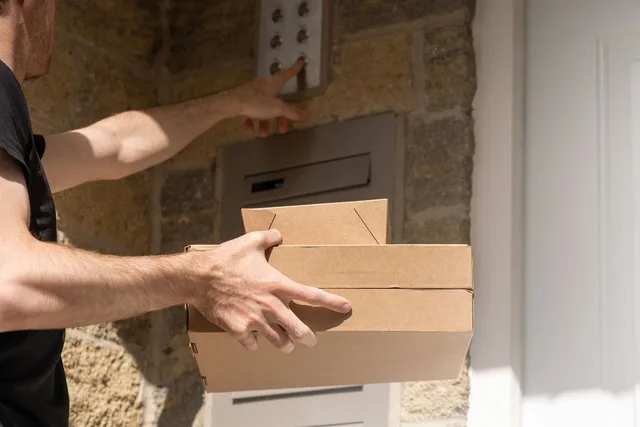
Delivery attempt. At each address, the driver checks the stop instructions and attempts delivery to the intended recipient or an authorized location. For a completed delivery, the driver records the timestamp and, as required by the customer, the recipient name, signature, or photo.
Exceptions and returns. If access is blocked, nobody can accept the parcel, or the address is wrong, the driver records the reason and contacts dispatch rather than marking the stop complete. Dispatch follows the customer's instructions for a reattempt, another authorized drop-off, or return to the depot; returned parcels are scanned back into custody and unresolved stops are flagged for follow-up.
Route close and billing. The driver reports exceptions and returns, and depot or dispatch staff match returned items and completed-stop records to the route manifest. Billing staff compare completed deliveries and approved extra work with the contract's billable rules, issue the invoice, and reconcile disputed stops or payment discrepancies against route records and proof of delivery.
Route density and stop sequencing
Cost per stop falls as stops cluster. A driver who finishes one drop every six minutes in a dense commercial district will not match that pace on a suburban loop where each address sits two miles from the last.
Dense vs Suburban Route
Dense commercial district
- Drop pace
- one per 6 min
- Stop spacing
- clustered
- Stops per hour
- 9 healthy
- Cost per stop
- falls
Suburban loop
- Drop pace
- far slower
- Stop spacing
- 2 miles apart
- Stops per hour
- 9 loses money
- Cost per stop
- rises
Sequence stops by time window first, then by geography inside each window. A customer who needs delivery before 10 a.m. anchors the morning; everything flexible fills the gaps around it. Routing software helps, but the dispatcher still decides which stops are worth keeping.
Measure density as stops per driving hour, not stops per day. A route that produces nine stops an hour in a downtown core is healthy. The same nine stops spread across a metro area is a route that loses money on fuel and parking alone.
Cost per stop and cost per mile
Two numbers tell you whether a contract works. Cost per stop is total route cost divided by completed stops. Cost per mile is total route cost divided by miles driven. Track both, because a route can look fine on one and fail on the other.
Total Route Cost Inputs
- driver pay
- fuel or charging
- vehicle wear
- insurance
- parking
- tickets
- dispatcher's time
Total route cost includes several factors:
- driver pay
- fuel or charging
- vehicle wear
- insurance
- parking
- tickets
- the dispatcher's time Divide that sum by stops to get your real number. If the customer pays less per stop than that figure, volume will not fix it.
Parking citations belong in the cost model, not in a slush fund. In Los Angeles, commercial loading zones, meter rules, and alley restrictions vary block by block, and a route that ignores them absorbs the fines. Check the current rules with the city's transportation department rather than assuming a zone is legal because another driver uses it.
Driver pay structures
Hourly pay suits routes with unpredictable dwell time, such as medical courier work where a front desk can hold a driver twenty minutes. Per-stop pay suits dense, repeatable routes where the driver controls pace.
Driver Pay Structures
Hourly
- Best for
- unpredictable dwell
- Pace control
- dispatcher
- Main risk
- idle time
- Control
- schedule
Per-stop
- Best for
- dense repeatable
- Pace control
- driver
- Main risk
- low density
- Control
- limited
1099
- Best for
- looks cheap
- Pace control
- driver
- Main risk
- back taxes
- Control
- low
W-2
- Best for
- customer-facing
- Pace control
- employer
- Main risk
- payroll tax
- Control
- training, appearance
1099 contracting looks cheaper on paper and often is not. A misclassified driver can trigger back taxes, penalties, and interest, and the IRS publishes the factors it weighs. Worker classification is a tax and employment question, so take it to a CPA or an enrolled agent before you sign anything.
W-2 drivers cost more per hour and give you control over training, appearance, and schedule. For routes where the customer sees the driver, that control is usually worth the payroll tax.
Vehicles, equipment and what each route needs
Best for
- Cargo bike
- Dense downtown cores, short hops, bike-legal lanes
- Cargo van
- Standard parcel and medical routes
- Box truck
- Bulk pallets, multi-stop freight
- Insulated bag or cooler
- Food, pharmacy, temperature-sensitive goods
Watch
- Cargo bike
- Limited weight, weather exposure
- Cargo van
- Parking size, cargo securement
- Box truck
- DOT weight thresholds, securement rules
- Insulated bag or cooler
- Hold time, seal integrity
A scanner or phone app that captures time, location, and signature at the door replaces most end-of-day paperwork. Buy the scanner your dispatch software supports; a cheap one that will not sync costs more in re-entry than it saves.
Cargo securement is not optional on any vehicle. FMCSA publishes the interstate securement rules, including general performance duties for tiedowns and containers. Read them at FMCSA cargo securement rules and check how they apply to your vehicle class and route.
Software for dispatch, routing and proof of delivery
Dispatch software does four jobs: assigns stops, sequences them, tracks the driver, and stores proof of delivery. Routing tools add traffic and time-window logic. Customer tracking pages cut inbound "where is my package" calls, which is often the largest hidden labor cost in a small courier business.
Examples include Onfleet, a delivery management platform with dispatch and proof-of-delivery capabilities, and Route4Me and OptimoRoute for route planning and optimization. Check current integrations with your driver app and scanner before choosing.
Proof of Delivery Records
- stop-level timestamps
- photos at the door
- signatures
- customer-ready export
Pick software by the paperwork it produces, not the dashboard. You need stop-level timestamps, photos, signatures, and an export you can hand to a customer disputing a claim.
Authority, permits and paperwork
Interstate operation requires FMCSA operating authority and a USDOT number; intrastate operation is governed by your state DOT, and the thresholds differ. Some cities add their own courier permits, and bike courier licensing in Portland and Seattle sits with the city, not the state.
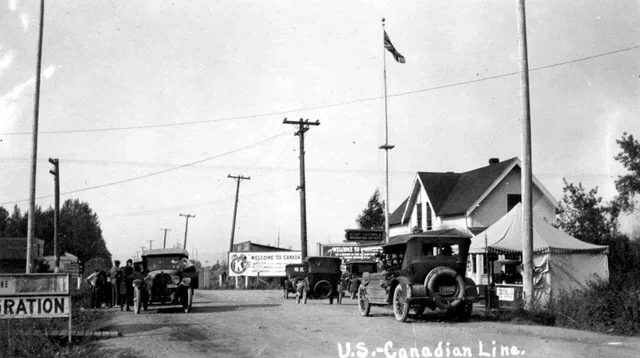
Customs paperwork for parcels crossing into Canada is a CBP matter, and classification questions go to a licensed customs broker. None of this is a place to guess: confirm with FMCSA, your state DOT, the city permit office, or CBP directly, and use a licensed attorney for authority and contract questions.
Insurance, records and tax reporting
Commercial auto, cargo, general liability, and workers' compensation coverage each answer a different failure. Required limits and policy terms vary by state and by what you haul, so confirm with your state insurance regulator and a licensed broker rather than copying another carrier's certificate.
Keep records that show income and expenses clearly. The IRS lists the categories it expects at IRS recordkeeping guidance.
- purchases
- sales
- payroll
- assets Schedule C and 1099-NEC reporting are tax questions for a CPA or enrolled agent.
For pay benchmarking, the Bureau of Labor Statistics publishes occupation and wage estimates by metro area at BLS occupational wage tables. Use them as one input when reviewing driver compensation, not as a rate card.
Worked example: pricing a twelve-stop medical route
A clinic asks for twelve daily stops across a metro area, 9 a.m. to 3 p.m. Price it in variables you fill with your own figures.
- Let S be stops per day (12) and D be driving miles per day.
- Let H be paid driver hours (6) and W be the driver's hourly cost including payroll taxes.
- Let F be fuel or charging cost per mile and V be vehicle wear per mile.
- Let P be daily parking and citation allowance.
Total daily cost is (H x W) + (D x F) + (D x V) + P. Divide by S to get cost per stop. If the clinic's offer sits below that number, the route loses money at any volume, and the fix is fewer stops, a tighter geography, or a higher rate.
Now test density. If the same twelve stops sit inside three square miles, driving miles drop and cost per stop falls. If they sprawl across forty miles, cost per stop rises even though the stop count never changed.
Disruption, safety and weather
Snow, hurricanes, and flooding change what a route can safely do. Routing decisions in those conditions belong to NOAA forecasts, your state emergency management agency, and local road authorities, not to a dispatch board.
For driver safety programs, OSHA publishes a management framework that finds and fixes hazards before an injury or inspection does, at OSHA safety management. Apply it to loading, lifting, parking, and lone-worker check-ins.
Common questions
How many stops should one driver run in a day?
There is no universal number. A dense urban route can support far more stops than a suburban one in the same hours. Measure your own stops per driving hour for a month, then set the target from that baseline rather than from another company's route sheet.
Should drivers be hourly or per stop?
Hourly fits routes with unpredictable dwell time, such as medical or pharmacy work. Per-stop fits dense, repeatable routes where the driver controls pace. Whichever you choose, run the classification and pay questions past a CPA before you hire.
What breaks a courier business first?
Underpriced contracts. A rate that ignores parking, dwell time, and failed delivery attempts looks profitable until the first month of real invoices. Rebuild the rate from cost per stop whenever fuel, wages, or parking rules change.
Do I need operating authority for local deliveries?
It depends on whether you cross state lines and what you carry. FMCSA governs interstate authority; your state DOT governs intrastate operation; cities add their own permits. Confirm your specific situation with the agency that sets the rule and with a licensed attorney.