Guides
Local delivery equipment reviewed: what holds up and what does not
Cargo bikes, vans, insulated bags and handheld scanners reviewed for what each does well and where each one fails on a real working courier route.
What to take away
- Local delivery equipment holds up or fails against one route, not a brochure: a cargo bike wins dense downtown stops, a van wins suburbs and bulk.
- Buy bags and scanners that survive one full shift before you buy a second vehicle.
- Every piece of equipment carries a cost per stop, not just a purchase price.
- Keep the paperwork for each assetpurchase record, warranty, repair history, assigned driver.
- Pilot one item on one route for a month before you standardize it across the fleet.
This article covers local delivery operations in general. It is not legal, tax, insurance or safety advice. Requirements depend on what you carry, where you drive and who drives. Confirm current rules with the authority that sets them before you buy or deploy.
The title asks a plain question: which local delivery equipment actually holds up, and which does not. That question has an answer only against a route. A cargo bike that is perfect for twelve stops in a dense downtown is useless for a 40-mile suburban run with two pallets.
So this review names real equipment, says what each item is for, and says where it fails. It does not rank by price, because price is the least useful number in the decision.
Cargo bikes: Urban Arrow Family and Tern GSD
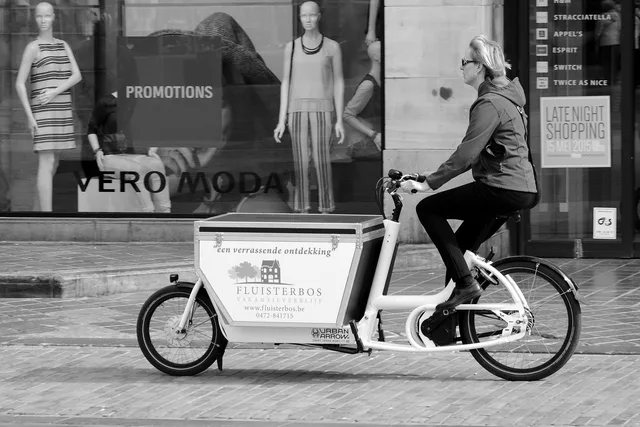
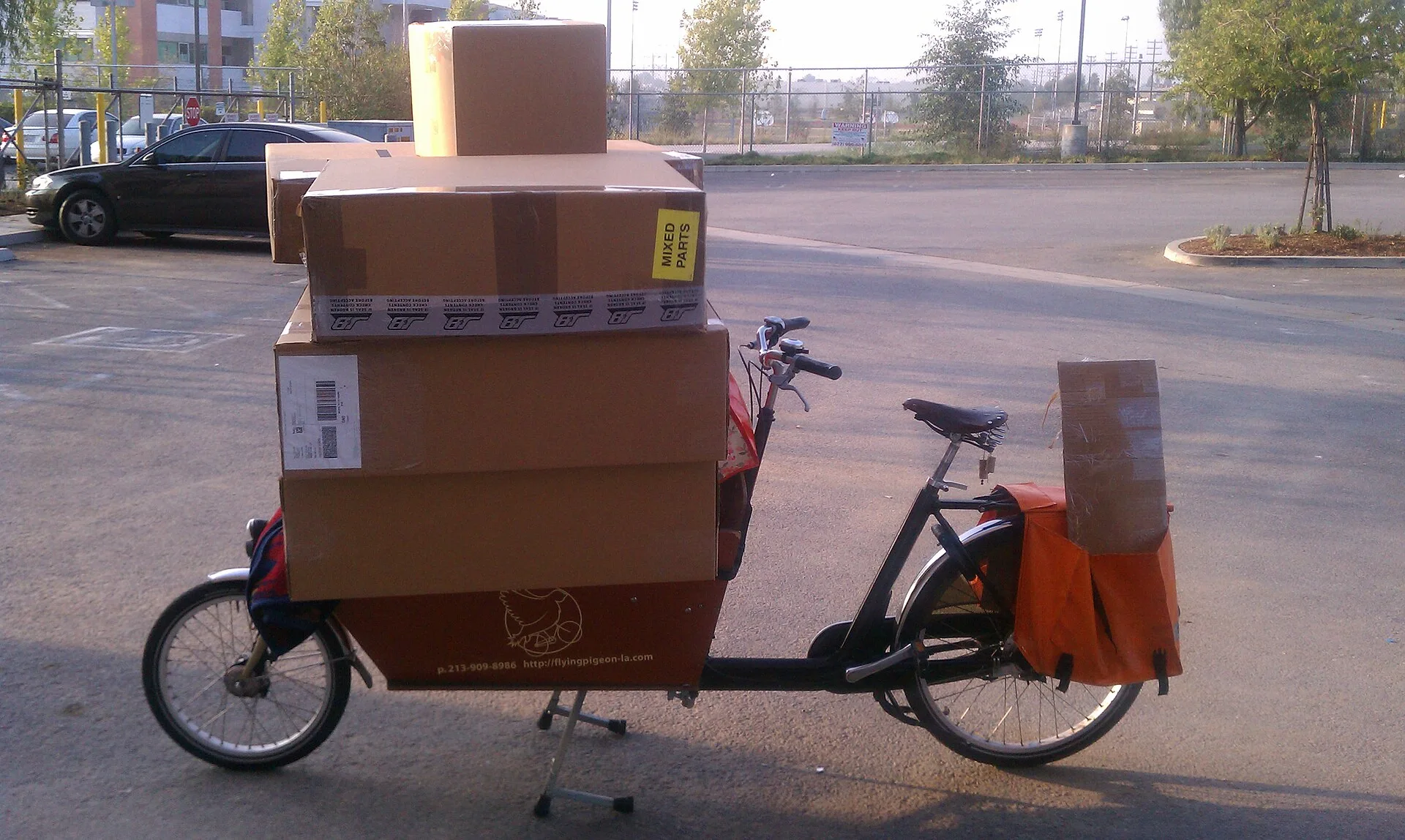
A cargo bike is a bicycle built to carry freight, usually with a longtail frame or a front box. The two shapes behave differently. A longtail keeps a normal wheelbase and handles like a bike. A front-loading box bike carries more volume but turns like a small truck.
Urban Arrow Family is a front-loading box bike with a rain cover. It suits pharmacy and grocery runs where volume matters more than speed. New models typically sell from $6,000 to $9,000 depending on battery and box.
Tern GSD is a longtail that folds smaller and fits a standard bike rack. It suits a courier who locks up outside a building all day. Current GSD models typically sell from $5,000 to $7,000.
Where cargo bikes fail: hills, ice, and any route with more than about 15 miles between stops. They also fail on cargo weight limits that owners discover only when a loaded box will not climb a grade. Check the manufacturer's rated payload and stay under it.
The Urban Arrow Family and Tern GSD both hold up on dense routes, but neither replaces a van for bulk or distance.
Vans: Transit Connect, ProMaster City, Transit and Sprinter
For anything outside a dense core, the choice narrows to two van classes. A compact van such as the Ford Transit Connect or Ram ProMaster City fits residential streets. Both are discontinued in the U.S. new market, so most buyers shop used. Used compact vans typically cost $18,000 to $30,000. They return better fuel numbers on short hops.
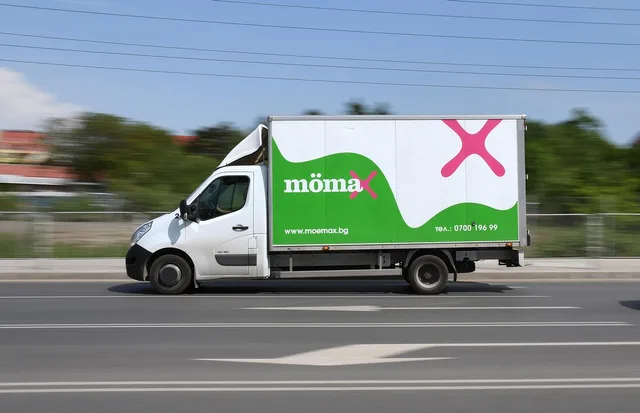
A full-size Ford Transit or Mercedes-Benz Sprinter carries pallets and gives a driver room to stand. New full-size vans typically cost $45,000 to $60,000 before upfit. Holds up: the Transit and Sprinter on suburban bulk routes. Fails: compact vans on pallet work, because the cargo floor is too short and the payload too low.
The van itself is rarely the failure. The upfit is. A shelving package bought before the route is measured will block the sliding door or swallow the cargo floor. Measure the tallest and widest item you actually carry, then buy shelving.
Vans also carry the highest fixed cost per stop. That cost only falls when route density rises. Vans and cargo bikes belong on different routes, not the same one.
Insulated bags: Polar Bear soft-sided and Cambro rigid
An insulated bag is the cheapest piece of equipment that decides whether a customer reorders. Two names dominate: Polar Bear soft-sided bags and rigid Cambro carriers. Soft-sided bags typically cost $50 to $200. Cambro carriers typically cost $150 to $500.
Soft-sided bags suit hot food and short runs under about 20 minutes. Rigid carriers hold temperature longer and stack in a van, which matters for multi-stop catering. Both fail the same way: a bag rated for two hours is used for four, and the customer gets cold food.
Match the bag to the promised delivery window, not to the best-case run. If your quoted window is 45 minutes, buy for 90. Holds up: Polar Bear bags on short hot runs, Cambro carriers on stacked catering. Fails: either brand when the rated hold time is ignored.
Scanners: Zebra handhelds versus phones
Proof of delivery is where disputes are won or lost. The equipment splits into two groups: dedicated barcode scanners such as Zebra handhelds, and phones running a driver app. Zebra scanners read damaged or dirty labels that a phone camera misses, and they survive drops that kill a phone. New Zebra handhelds typically cost $500 to $1,500.
Phones cost nothing extra because the driver already carries one. Most small courier fleets run phones first and add scanners when label quality becomes a recurring complaint. Holds up: phones on clean labels and light parcel work. Fails: phones on greasy, torn or sun-faded labels, where Zebra scanners keep reading.
Either way, the record is the point. The local delivery equipment checklist for new owners covers what to log for each device, including assignment and repair history.
Dollies and securement: Magliner hand trucks
A hand truck and a set of ratchet straps cost less than one damaged parcel and get used on nearly every route. The Magliner hand truck is the standard in the trade because parts are replaceable. New Magliner hand trucks typically cost $200 to $500. Cheaper folding dollies fail at the axle, usually under a load.
Securement is not optional on the road. The Federal Motor Carrier Safety Administration: Cargo Securement Rules set out the performance duties for securing cargo, and applicability depends on the vehicle and the operation. Check which rules cover your fleet.
What each item costs per stop
Purchase price tells you almost nothing. Cost per stop is calculated like this:
- purchase price
- maintenance
- insurance
- storage
Divide that sum by stops served over the asset's life. Run that for a cargo bike and a van on the same route. The answer usually surprises owners. A $6,000 cargo bike serving 40 dense stops a day beats a $40,000 van on the same route, and loses badly on a suburban route with 12 stops.
The same arithmetic decides repair or replace. When annual repair cost passes the cost of a replacement asset spread over its expected life, the old unit is done, whatever its book value says.
Safety, records and the paperwork behind the equipment
Equipment decisions sit inside a safety program. The Occupational Safety and Health Administration: Safety Management describes a proactive program that finds and fixes hazards before an injury or inspection does. For a courier fleet, that means training on loading, lifting and securement. The dolly alone is not enough.
Records matter for the same reason. The Internal Revenue Service: What kind of records should I keep? explains that a business may choose any recordkeeping system that clearly shows income and expenses, and should keep documents supporting purchases, assets and payroll. That is the file that proves what you own and what you spent.
For the wider business side, including permits, insurance and hiring, the U.S. Small Business Administration: SBA Business Guide organizes ownership into planning, launch, management and growth.
None of this is tax, insurance or legal advice. Worker classification, coverage limits and licensing vary by state and city, so confirm with the IRS, your state insurance regulator and a licensed attorney or broker.
A worked example: one route, two setups
Take a downtown route with 35 stops inside three miles, mostly documents and small parcels.
- Cargo bikepurchase $6,000, annual maintenance $400, insurance $300, storage $600. Over three years that is $8,700, or about 23 cents per stop at 35 stops a day, 250 days a year.
- Compact vanpurchase $32,000, maintenance $1,800, insurance $1,600, storage $1,200. Over three years that is $45,800, or about $1.22 per stop on the same route.
The bike wins on this route by a wide margin. Move the same comparison to a suburban route with 12 stops spread over 40 miles, and the van wins because the bike cannot cover the distance at all.
No single vehicle wins everywhere. The route decides, and the arithmetic makes the decision visible.
Common questions
Do I need a scanner if drivers already have phones?
Not at first. Phones handle clean labels and most proof-of-delivery needs, and they cost nothing extra. Add dedicated scanners when damaged or dirty labels start causing failed scans, because that is the point where the phone camera stops being enough.
How long should insulated bags last?
A soft-sided bag used daily typically needs replacing within a year or two, depending on how often it is washed and how it is stored. Rigid carriers last longer because there is less fabric to fail. Replace when the lining tears or the bag stops holding temperature for your quoted window.
Is a cargo bike legal on every route?
No. Cities set their own rules for where bikes may operate, how they may park and what licensing a bike courier needs. Portland and Seattle both license bike couriers, and other cities regulate differently. Check with your city before you build a route around a bike.
What is the first thing a new owner should buy?
Nothing, until the route is measured. Write down the stops, the distance, the heaviest item and the promised delivery window. That list tells you which vehicle, which bag and which scanner you need. Buying before that step is how fleets end up with idle assets.